Lindenhurst, on Long Island’s South Shore, gave us two of our favorite marine projects — and they could not have been less alike. East Shore Marine arrived with a website problem: an aging HTML site that Google effectively couldn’t see, sitting in front of a busy operation selling, servicing, storing, and docking boats. Anchorage Yacht Club, minutes away on the same waterfront, arrived with no website at all — a full-service club running slips, a pool, courts, and a fuel dock entirely offline.
Same harbor, same industry, completely different assignments. That contrast is why we tell these two stories together: they prove “a marina website” isn’t one thing. It’s whatever the operation behind it actually needs. Here’s what each build involved, and what the pair taught us about doing web work on the water.
East Shore Marine: a working boatyard Google couldn’t find
A marina, dealer, and service yard with everything to show — and a site that showed none of it.
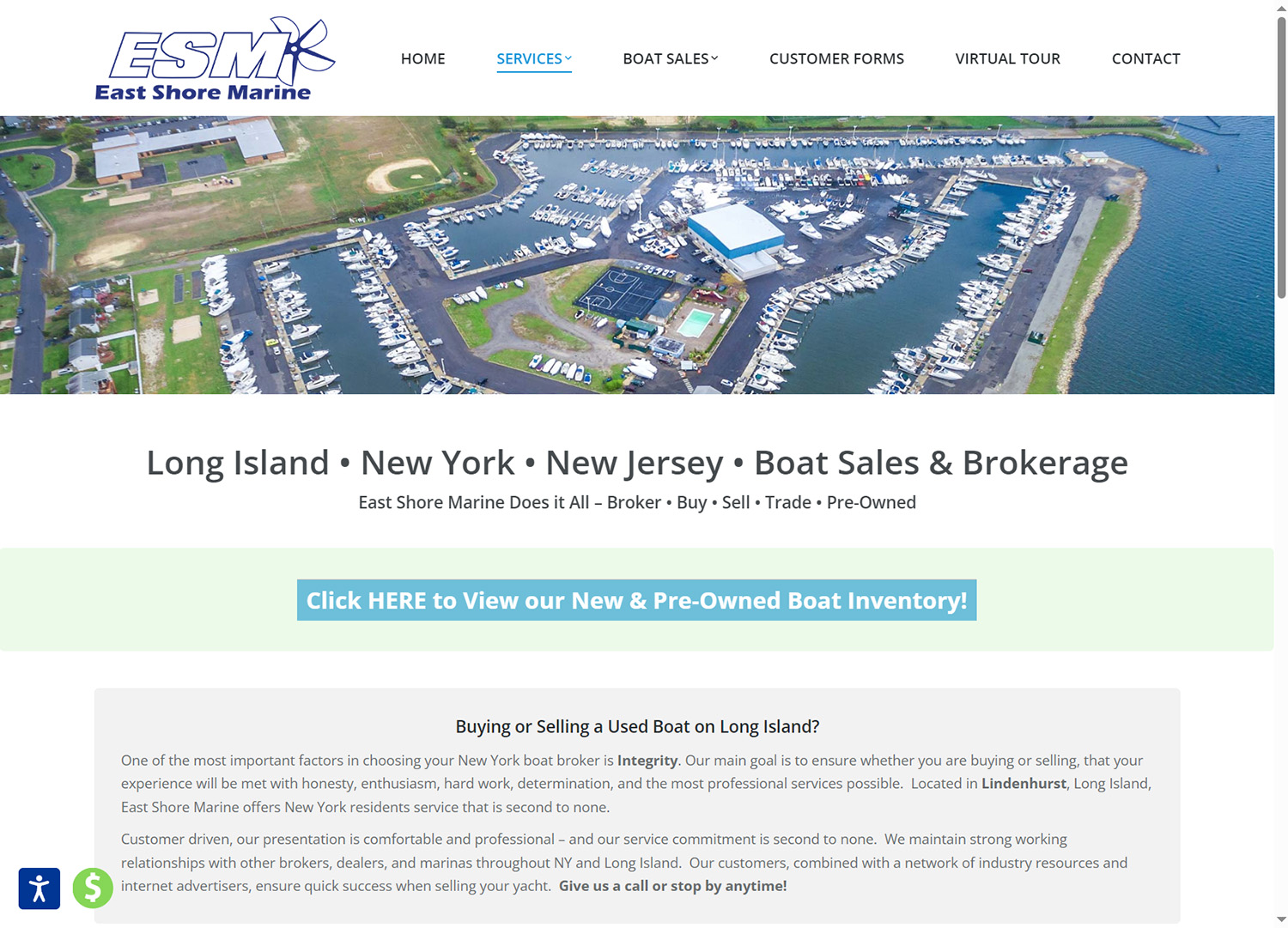
East Shore Marine does a bit of everything: dockage, dry storage, maintenance, a parts counter, and new and used boat sales. Before we met, all of that lived behind a dated, hand-coded HTML site that search engines largely ignored — customers who didn’t already know the yard had no realistic way to find it.
The rebuild started with research into the marine services market and local competitors, then a new site structure and fully original writing aimed at the searches that matter to a Long Island boatyard. We shot the property from the ground and the air, produced a custom video for the homepage, built a complete Google virtual tour of the facility, and layered accessibility-compliance software over the whole site. The finished scope is on the East Shore Marine case study.
The Yachtworld API: one update, every listing, everywhere
The feature that changed East Shore’s week: inventory that maintains itself.
The centerpiece of the build was inventory. A dealer’s website lives or dies on its listings, and the traditional approach — retyping every boat into the site after entering it in Yachtworld — guarantees the two fall out of sync. Buyers click a boat that sold weeks ago, trust evaporates, and the sales team inherits a second data-entry job nobody wanted.
We integrated Yachtworld’s API directly into the site instead. The team lists a boat once, on Yachtworld, and it appears on eastshoremarineny.com automatically — new and used stock, in real time, nothing to maintain on the website side. Around that feed we built brand- and model-specific sales pages, developed with marketing material gathered straight from the manufacturers.
The structure has proven durable, too. Since 2016 East Shore has changed boat lines five times, and each time we’ve stood up the new manufacturer’s pages and retired the old — while keeping the software underneath patched, secure, and current. A dealer site isn’t a launch; it’s a subscription to change.
Anchorage Yacht Club: building a clubhouse online from zero
No old site to fix, no content to migrate — a blank slate and one clear job: keep members informed.
Anchorage Yacht Club is the other kind of project. A full-service club — slips, fuel dock, pool, courts, clubhouse — with an active membership and, until we were hired, no website whatsoever. Everything ran on paper, phone calls, and bulletin boards.
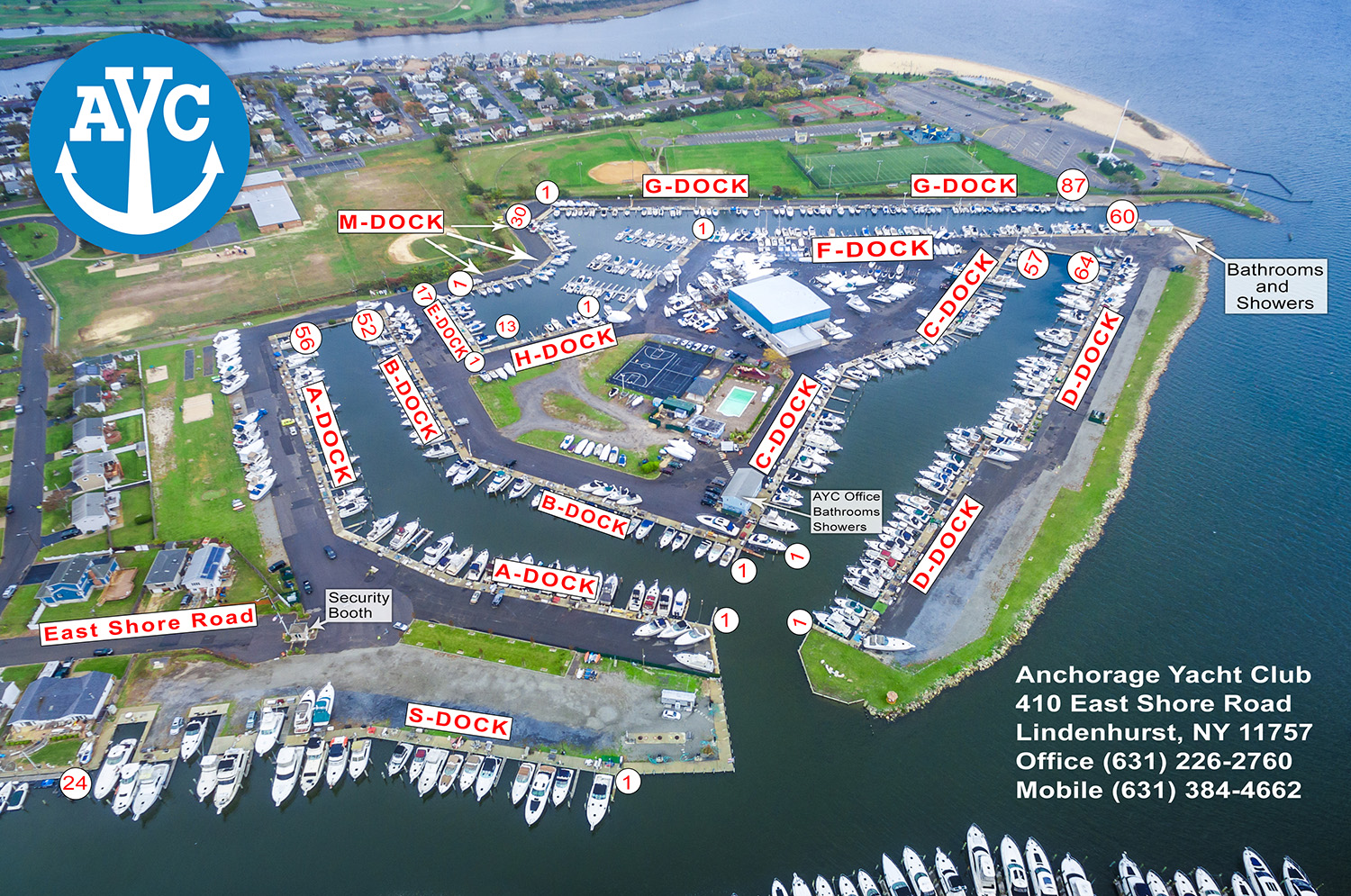
Working with club management, we designed a deliberately lightweight, clean site with one purpose: communication. Members land there for announcements and forms, a slip-locator map answers “where’s the boat” for guests and new arrivals, and a simple contact path serves prospective members. We also coordinated with a third-party provider to integrate live webcams, so members can check the water over the marina before they drive down. The full breakdown is on the Anchorage Yacht Club case study.
One summer flyover, three jobs done
Anchorage’s drone shoot became a homepage film, a social campaign, and the club’s favorite wall art.
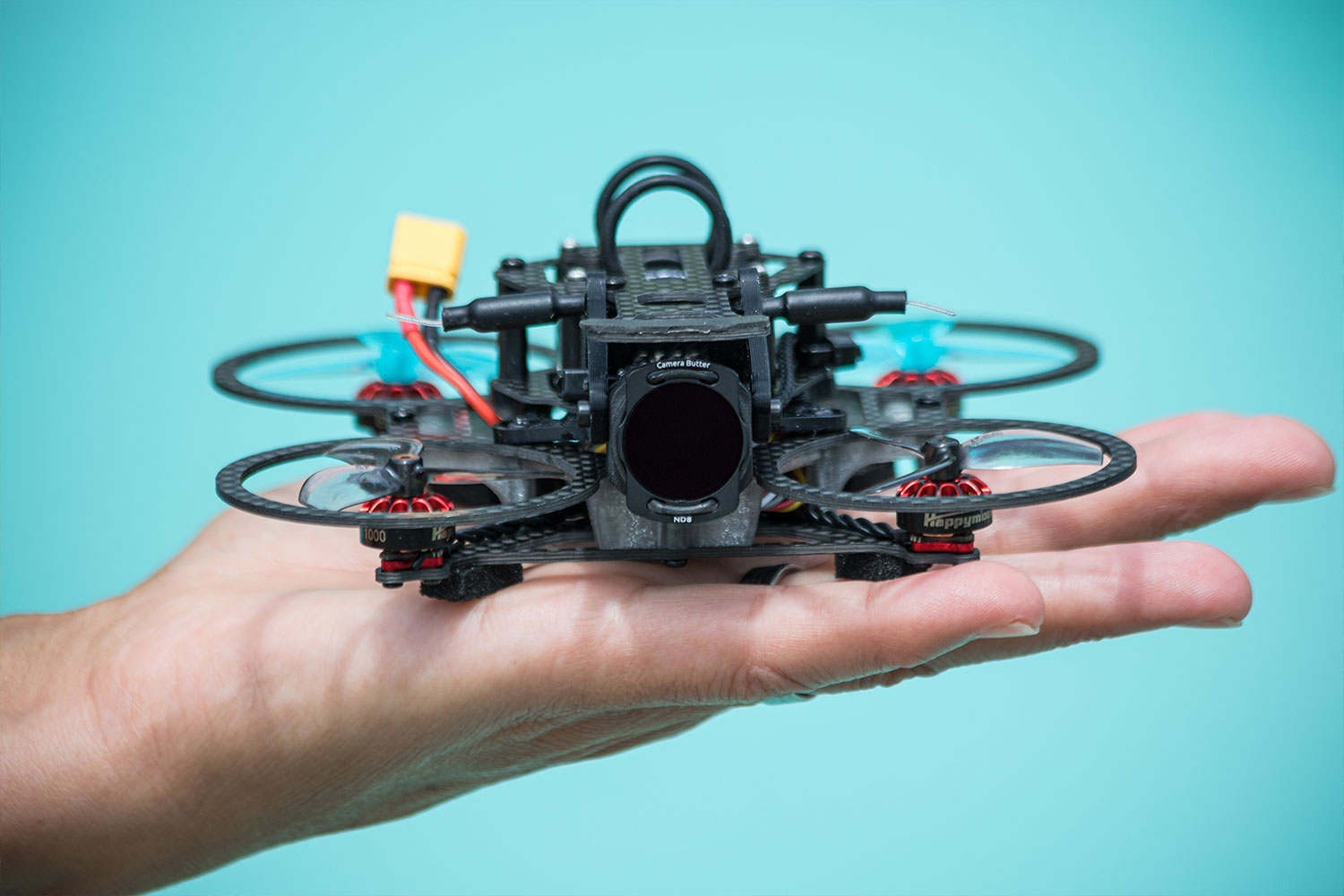
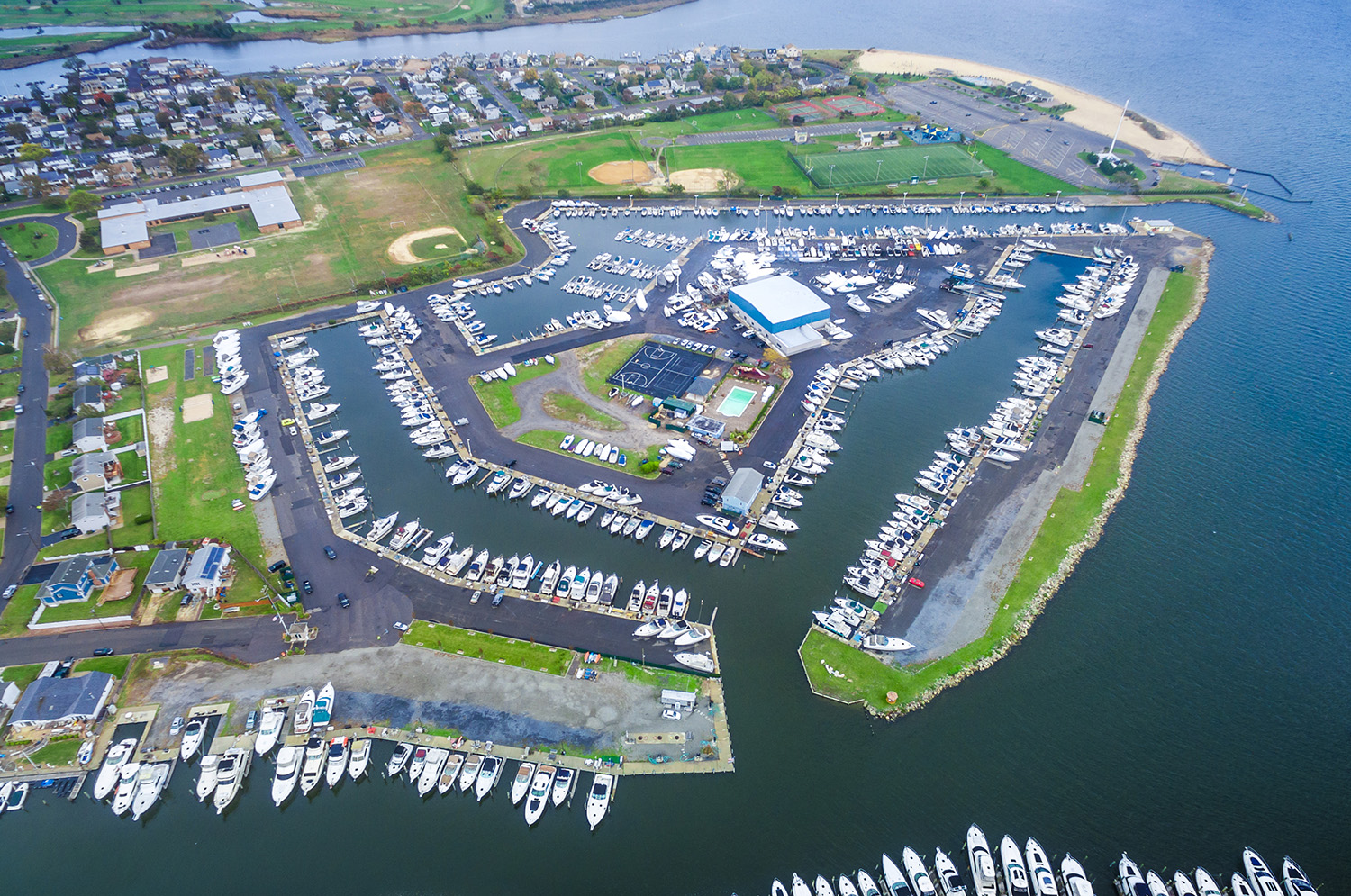
The media plan for Anchorage shows how far one well-planned shoot stretches. We flew the marina on a busy summer day and cut the footage two ways: a cinematic introduction that plays on the website’s homepage, and a promotional edit built for the club’s social channels. One flight, two deliverables, zero stock footage.
The same thinking produced our favorite artifact of the project: a large-format graphic mapping every boat slip in the marina by location, name, and number. It lives on the website as the slip locator — and hangs in the club’s main office as an enlarged framed print. When a graphic is accurate enough to run a marina from, it deserves a frame.
What both builds had in common
Opposite briefs, same spine: original media, phones-first design, and someone minding the software.
Strip away the differences and the same spine runs through both sites. Every image is real — the boats, the docks, and the water in the photos are the client’s own, shot by us on location, with the aerial photography and drone footage handled by our own crew rather than a subcontractor. East Shore’s facility got a complete Google 360° virtual tour on top, so a buyer can walk the yard from a couch in February.
Both sites are built for the way marine customers actually browse: standing on a dock, phone in hand, sun on the screen. And both stay on our servers under our watch — hosting, backups, security patches, and the steady drip of content updates are our responsibility, not the client’s.
Figuring out what your waterfront needs
Neither build was bigger or better than the other — each was right-sized. Before any marine business briefs a designer, three questions sort out most of the scope:
Where does your inventory or schedule already live? If listings sit in Yachtworld, a broker system, or booking software, the website should pull from that system, not duplicate it. Double entry is how sites go stale.
Is the site for being found, or for serving people who already found you? East Shore needed search visibility above all; Anchorage needed a portal for an existing membership. The answer changes everything about structure and content.
What actually deserves the camera? A travel lift in motion, a full summer marina from the air, a showroom of new hulls — decide what tells your story, then shoot it properly once and use it everywhere.
Answer those three and the shape of your project is mostly drawn — whether that’s an inventory-driven dealer platform or a lean club portal.
Common questions from marina and club owners
A few things marina managers and club boards ask us before their own projects kick off:
Quick answers
Can you pull our boat listings from Yachtworld or a broker system?
Yes — that’s exactly how East Shore’s sales pages work. Where a platform offers an API or a clean export, we feed the site from it directly, so your team updates inventory once at the source and the website follows automatically.
How long does a marine website like these take?
Scope sets the timeline. A lean communication site like Anchorage’s moves quickly; a media-heavy dealer platform with API work takes longer. Most marine clients plan the build for the off-season so the new site is live before the docks fill.
Do you photograph and film the marina yourselves?
Always. Ground photography, drone work, video, and 360° tours are all produced by our own team on your property — and we plan each shoot so the material feeds the website, your social channels, and even print, like Anchorage’s framed slip map.
Your website should work as hard as the yard does
East Shore Marine and Anchorage Yacht Club started from opposite ends of the spectrum — one drowning in inventory, one starting from a blank page — and both ended up with sites that fit the way they run. That’s the whole philosophy behind our websites for marinas and yacht clubs: learn the operation first, then build only what earns its keep.
If your waterfront business is due for the East Shore treatment, the Anchorage treatment, or something in between — request a call-back below and tell us what’s tied up at your docks.
Boheema builds and maintains marine websites from our home base in New Jersey, serving Long Island, NYC, and beyond.